
Recipe online
fisslir.com/Recipe
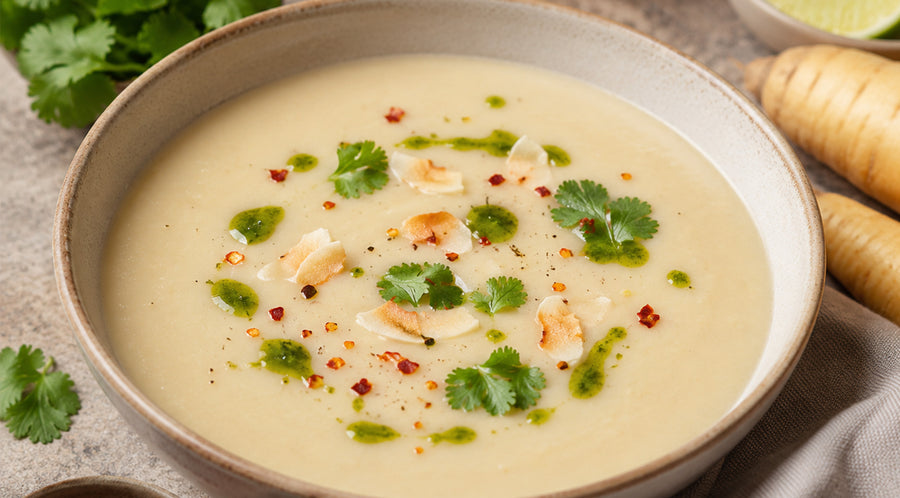
Parsnip Cream Soup with Ginger, Coconut Milk & Coriander Oil from the Pressure Cooker
- Total Time
- 25 min
- Cooking Time
- 4 min
- Preperation Time
- 20 min
- Yield
- 4 servings
Ingredients
- FOR THE SOUP
- 800 gparsnips
- 1 medium-sizedonion
- 20 gfresh ginger
- 1clove of garlic
- 2 tbspneutral vegetable oil
- 600 mlvegetable stock
- 250 mlunsweetened coconut milk
- 1organic lime
- salt
- freshly ground pepper
- optional: chili flakes
- FOR THE CORIANDER OIL
- 1 bunchfresh coriander, about 30 g
- 80 mlneutral vegetable oil
- 1 pinchsalt
- TO SERVE
- somereserved coriander leaves
- optional: 2 tbsp coconut chips
- optional: chili flakes
Fissler products used
- Vitavit® Premium Pressure Cooker
- Acacia wood cutting board 45 x 30 cm
- Fissler Essential® Chef's knife 18cm
- Ceratal® Evo Classic Pan
Instructions
Step 1 of 6: Prepare coriander oil and garnish
Wash the coriander and pat it dry carefully. Set aside a few nice leaves for plating. Roughly chop the remaining coriander, including the tender stems. Wash the lime in hot water and finely grate about ½ tsp of zest. Then halve the lime and squeeze out the juice. Put the coriander, lime zest, 80 ml vegetable oil, and a pinch of salt into a tall mixing jug. Purée finely with a hand blender until you have an intensely green oil. If you want it especially smooth, strain the coriander oil through a fine sieve afterwards. Chill until ready to serve. If coconut chips are used, rub a pan with a little cooking oil and then briefly toast the coconut chips over medium heat until golden brown. Remove from the pan and set aside.
Step 2 of 6: Prepare parsnips and aromatics
Peel the parsnips, trim the ends, and cut the roots into pieces about 2 cm large. Quarter very large specimens lengthwise and cut out any hard or woody core. Peel and dice the onion. Also peel the ginger and garlic and finely chop or grate them.
Step 3 of 6: Sauté the vegetables in the open pressure cooker
Heat the vegetable oil in the open pressure cooker. Sauté the onion in it until translucent for about 3 minutes. Add the parsnips and fry for about 3 minutes. Add the ginger and garlic and sauté for another minute. Stir regularly so the ingredients do not stick to the bottom of the pot.
Step 4 of 6: Cook under pressure
Deglaze with 600 ml of vegetable stock. Carefully loosen any bits stuck to the bottom of the pot with a wooden spoon. Lock the pressure cooker and bring it to the high pressure setting, or the setting intended for vegetables. Once full pressure is reached, cook the parsnips under pressure for 4 minutes. When the cooking time is up, remove the pot from the heat and let the pressure drop naturally for about 5 minutes. Then carefully release the remaining pressure. Open the pot only when it is completely depressurized.
Step 5 of 6: Blend the soup until smooth
Add the coconut milk to the pot and heat briefly. Then use a hand blender to puree everything thoroughly until the soup is smooth and velvety. First stir in 1 tbsp lime juice. Season with salt, pepper, and a little chili if desired. The lime should balance the natural sweetness of the parsnips without overpowering the delicate vegetable flavor. If the parsnip soup is too thick, add hot vegetable stock or water a little at a time. For an especially fine texture: puree the soup for at least one minute so the parsnips, coconut milk, and broth fully combine. For an especially silky parsnip cream soup, it can also be passed through a fine sieve after blending.
Step 6 of 6: Plate and serve
Die hot soup among bowls or deep plates. Drizzle the coriander oil over it in a circular pattern and garnish with the reserved coriander leaves. If desired, add toasted coconut chips and a few chili flakes on top. This brings creamy soup, fresh herbs, and crispy accents together right on the plate.